
A Shared Room for Two Siblings: How to Adapt the Sleep Space to Different Preferences?
How to set up a shared bedroom so that each of two siblings gets a personal corner‚ their own light and a calmer evening routine.
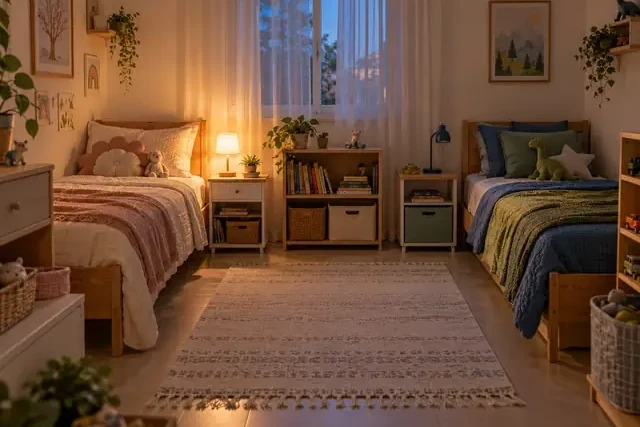
You can start with the items each child uses personally‚ rather than trying to create two identical sides. When choosing the furnishings‚ a children's duvet can be chosen by size‚ season and how it feels‚ alongside choosing a color and a place for favorite things. These decisions should suit the child's age and actual use‚ without adding accessories just to complete a symmetrical look. When each child can express a preference in the small details‚ it is easier to keep a shared room that also has a sense of personal space.
Preferences Before Rearranging
Before changing the room‚ it is worth finding out what really bothers each of the children in the evening. The question can be simple and focused: what is comfortable about the current spot‚ which item needs to be close by and what happens when the other sibling is still active. It is important to distinguish between a lasting preference and a passing wish that comes from a new item or a color seen somewhere else. A short conversation makes it possible to identify a practical need without turning every choice into a long negotiation. Sometimes it turns out that the change needed is small‚ like an extra place for a book or a different position for a lamp. There is no need to promise that every request will be met exactly as it was phrased. You can show the children the limits of the room and the options that suit it‚ and choose together from a few limited alternatives. This way the choice is made within a clear framework‚ and parents do not have to deal with an open-ended list of additions. Preferences can also change over time‚ so it is best to keep some of the solutions flexible. The room should serve life in it over a long period‚ not freeze a single design decision made on the day it was set up.
A Personal Zone Without a Big Divider
A personal space can be based on the bed‚ a small shelf or a storage compartment assigned to each child. There is no need to place a dividing piece of furniture in the middle of the room‚ especially if it narrows the path between the beds. It is worth checking how the children reach their things and how doors and drawers open in actual use. The zones should be clear even without prominent labels everywhere. When each child knows where their things are and what is shared‚ it is easier to keep order and reduce arguments over items left on a shared surface. Fairness does not require being identical. If one side of the room is by a window and the other is close to the closet‚ you can look at how each of them meets different needs. It is important that the division feels fair in terms of use‚ not just in the number of accessories. You can also move portable items later if the layout does not work. A check after a few days of use sometimes reveals problems that were not visible in the plan‚ like an area that is hard to reach or an item both children need at exactly the same time.
Separate Lighting in the Same Room
When one child wants to read and the other is already winding down‚ a local light source can be more useful than the main lighting. The choice should suit the child's age‚ the spot and their ability to switch it on‚ and its placement should keep the walkways clear. It is worth checking where the light points when the child is in bed‚ not just how the lamp looks on the nightstand. It is also important to agree on when it is used and how to be considerate of the other sibling. Adjusting the lighting fits into the evening rules; on its own it does not solve a situation where expectations about activity times are unclear.
An Evening Routine with Clear Steps
Instead of relying on instructions repeated every evening‚ you can set a simple sequence for getting ready that works for both children. For example‚ picking up things from the walkway‚ putting the next morning's things in a fixed place and then quiet time in the room. The order does not have to be the same every day‚ but it should be clear what happens before the main light goes off. When the children know which steps are left‚ it is easier for them to coordinate. It is important that the sequence fits the family routine and does not take longer to prepare than the time it is meant to help organize. If getting-ready times differ‚ it is worth checking which steps can be done outside the shared room. Packing a bag or choosing clothes can be finished earlier‚ so there is no need to open closets again when the other sibling is already in bed. Reading time can also move elsewhere in the home when that suits the family. The goal is not to separate the children all evening‚ but to identify the steps that cause disturbance and give them a simple path. A small change in how things are done may be more practical than a big addition of furniture.
Favorite Things in Amounts That Fit the Space
A book‚ a favorite toy or a small item can give each child a feeling that their area belongs to them. It is worth choosing a set place for them‚ so they do not stay in the walkway or move to the other sibling's bed every evening. There is no need to fill every surface to express personality; you can keep a small number of items and swap them as interests change. The choice can be made together with the child‚ within limits that suit the room. This way personal decor fits into everyday use and does not become another layer of things to clear away before bedtime.
Shared Rules for the Shared Space
Alongside the personal choices‚ it is worth setting a few rules that apply to both: keeping the walkway clear‚ using the other child's things and how to ask for a change. The rules should be short and practical‚ so they are easy to remember and apply. When a disagreement comes up‚ you can go back to the need the rule was meant to serve‚ instead of arguing about each case as if it were new. Parents should also distinguish between a different preference and a real disturbance to the other child's use of the room. This distinction leaves room for personality without giving up mutual consideration.
Checking Again When the Routine Changes
A shared room changes along with the children. New books‚ a different school schedule or a new hobby can affect the things in the room and the hours it is used. It is worth checking from time to time whether the layout still works‚ and to change the portable items and the storage split first. There is no need to wait until the room is cluttered or the difficulty becomes permanent. A short conversation and a look at a few ordinary evenings can show what works and what needs adjusting. This way decisions rest on how the room is used now‚ not only on the layout set at the start.
In Summary
Adapting a shared room for two siblings starts with recognizing that each of them has their own preferences and habits. A clear personal zone‚ suitable lighting‚ accessible storage and a simple evening routine make room for differences within one space. Alongside personal choices‚ it is important to keep shared rules and to review the layout when needs change. When changes are made by paying attention to actual use‚ the room can stay comfortable for both‚ without turning the wish for a personal touch into a burden or constant friction.